Where can you wild camp on a canoe trip in Värmland?
Short answer
Under Sweden's right of public access you can pitch a few tents for a night or two on most land away from houses, including lake shores and islands. Nature reserves set their own rules: in Glaskogen you need the Glaskogen card and may stay at most two nights in one place, and in the Nordmarken lakes the prepared rest areas need the Dalsland–Nordmarken nature card and allow one night per site. Fires are limited in summer and banned entirely during a county fire ban.
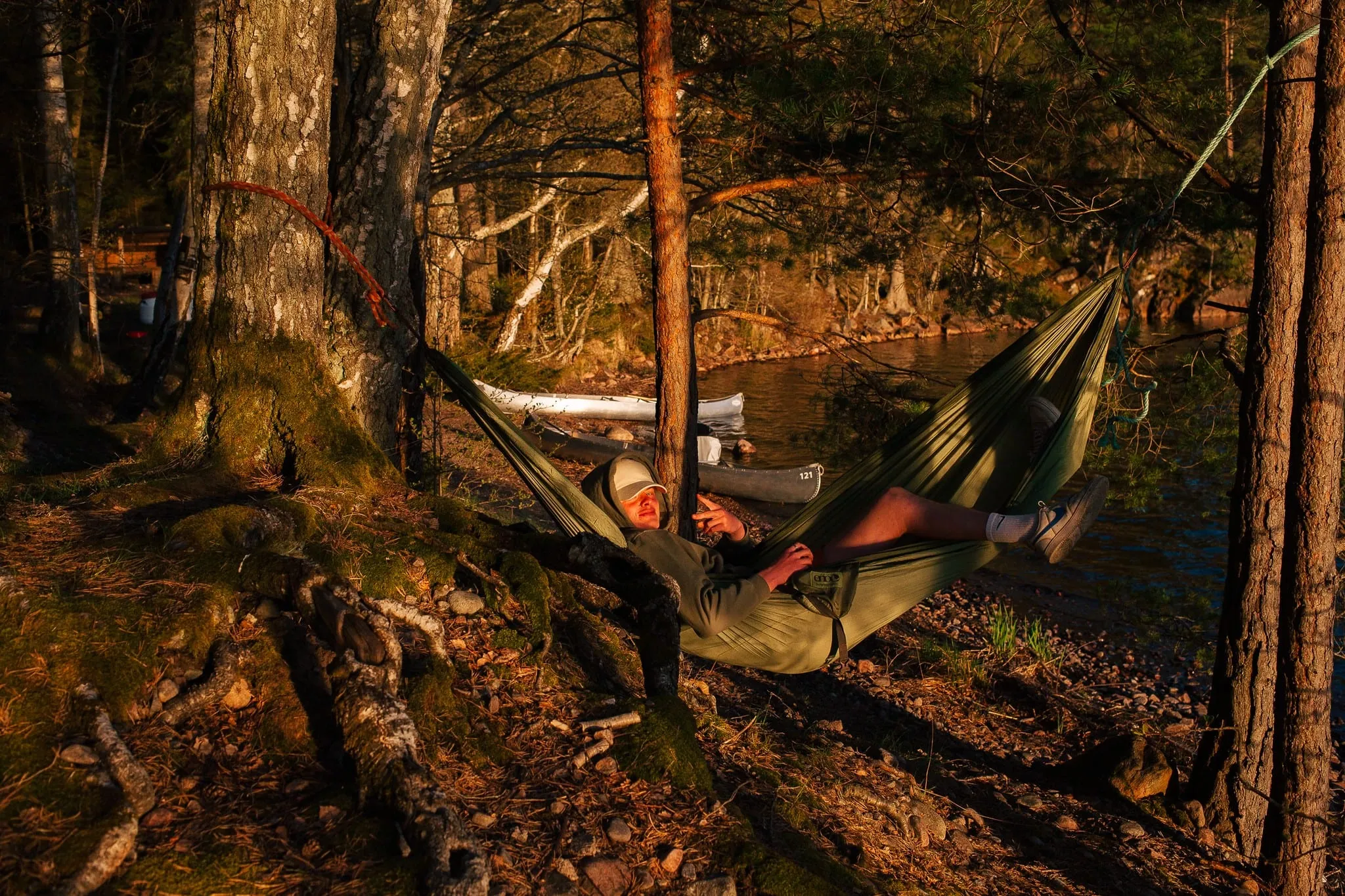
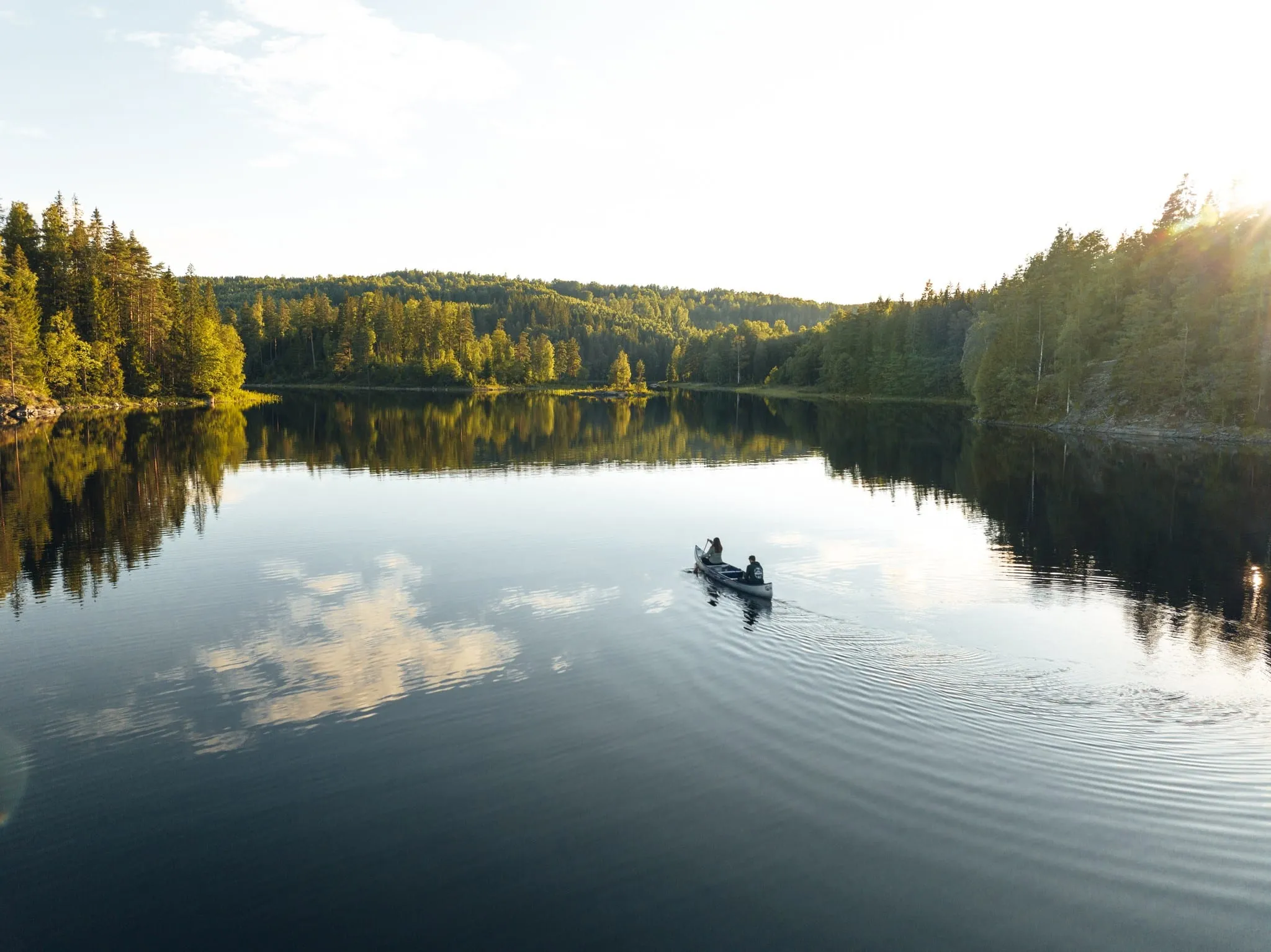
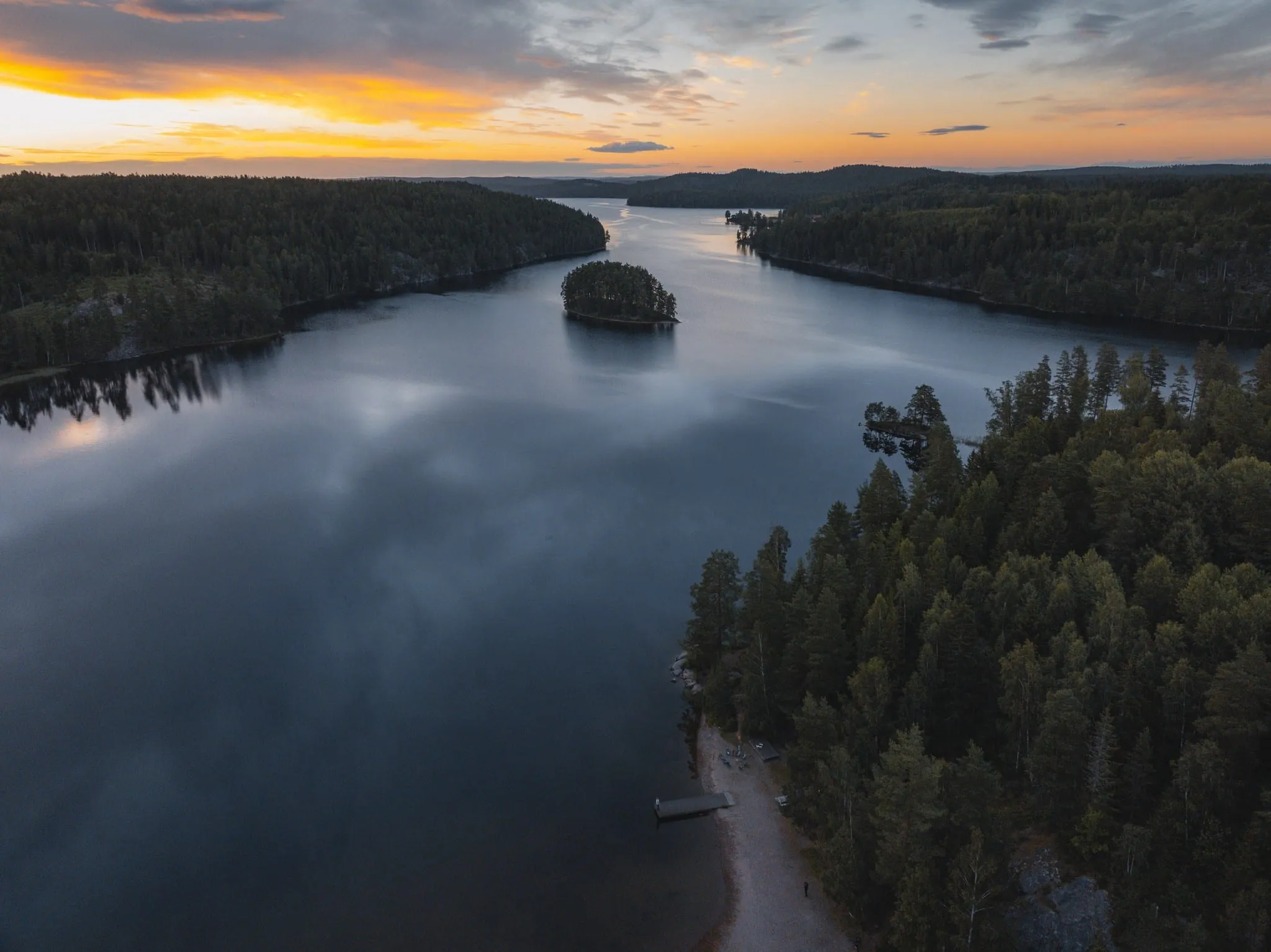
Sleeping on an island you paddled to is a large part of a canoe trip in Värmland. You can do it almost anywhere, but the rules change between open countryside, nature reserves and the managed rest areas of the lake district.
The right of public access
Sweden’s allemansrätten lets you camp on land you do not own, as long as you do not disturb or damage. The Swedish Environmental Protection Agency (Naturvårdsverket) gives the practical limits:
- A few tents. Two or three tents is the scale the right covers. A large group with many tents needs the landowner’s permission.
- A night or two. No law sets a number of nights in one place. The rule of thumb is one or two.
- Away from houses. Pick a spot where the people living nearby cannot see you from their windows.
- On hard ground. Choose ground that can take it, not a meadow or farmland.
- Not in bird protection areas. Landing on islands within bird or seal protection areas is not allowed while the restriction applies. Look for signs on the shore and check your map.
Groups on a paddling trip have no collective right to camp. The right belongs to each person, so a large group still needs the landowner’s permission.
Nature reserves set stricter rules
Nature reserves and national parks can limit camping to marked sites, or ban it entirely. Check the reserve’s rules (föreskrifter) before you plan a night inside one.
Glaskogen
Glaskogen is Värmland’s largest nature reserve, at about 28,000 ha across Arvika, Eda, Säffle and Årjäng municipalities. It has its own rules, set by the County Administrative Board:
| Rule | What it means for you |
|---|---|
| Tents for at most two consecutive nights without the landowner’s permission, except at a public campsite | Move on after two nights |
| Open fires only at marked, prepared fire sites from 15 April to 15 September | No beach fires in summer |
| Motorboats limited to 7 knots (15 knots on Stora Gla) | Quiet water for paddlers |
To use the shelters, overnight cabins, fireplaces with firewood and toilets, you need the Glaskogen card. Visit Värmland lists these prices: 65 SEK for a day (8 hours), 100 SEK for 24 hours, 250 SEK for 3 days and 600 SEK for a week. Children under 16 go free. Buy it at the information centre in Lenungshammar, the tourist office in Arvika, Arvika Kanot & Turistcenter, or on glaskogen.se. More in our Glaskogen guide.
Rest areas in Nordmarken
The lakes of Nordmarken, on the border with Dalsland, belong to the Dalsland–Nordmarken lake system. Its foundation (DANO) maintains about 105 numbered campsites across the system, on lakes on both sides of the border, including Västra Silen, Östra Silen, Foxen and Töck. Every site has a fixed fireplace and an eco-toilet, most have a wind shelter, and firewood is usually provided.
| Card | Dalsland–Nordmarken nature card, 80 SEK per person per night |
| Children | Under 12 free |
| Nights per site | One |
| Booking | Not possible; first come, first served |
| Fires, 1 June to 31 August | Only in the fixed fireplaces |
| Without the card | Allemansrätten applies; you may not use the shelters or fireplaces |
Rangers check cards. If you are found at a site without one, you pay the card plus an administrative fee on the spot. Take all your rubbish with you and use the toilets for nothing but their purpose: they are composting toilets and stop working when people throw litter in them.
Away from the rest areas, allemansrätten still applies on most of the shore. In practice the rest areas are the easier choice: many sit on islands and points, they have a toilet and a fireplace, and using them keeps wear off the rest of the shoreline.
Fire bans in Värmland
The County Administrative Board of Värmland (Länsstyrelsen) can declare a fire ban, and so can a municipality. There are two levels: a fire ban and a stricter one. The board bases its decision on SMHI’s forecast of fire risk in forest and land. In a strict ban, grilling is often banned even at fixed grill sites, and during a total ban on the Nordmarken rest areas, all open fire is forbidden, including in the fixed fireplaces.
Before each trip and every few days on the water:
- check the Brandrisk Ute app, which shows fire risk and bans for your position
- check the map of current bans on krisinformation.se
- read what the ban covers: the decision spells out which activities are forbidden, so check whether it includes camping stoves
Never light a fire on bare rock or next to large boulders: the rock cracks and the damage is permanent. Breaking a fire ban can lead to a fine.
The Klarälven
On the Klarälven, camping works differently. There are few formal sites, mostly beaches and, when the water is low, sandy islands. You camp under allemansrätten, and county fire bans apply there as anywhere else in Värmland. See whether to raft or canoe the Klarälven.
Where we would start
For a trip with a rest area every night, we would start at Outpost North in Gustavsfors, on the Dalsland side of the border. Both Lelång and Västra Silen start at its shore, and both have numbered rest areas within a day’s paddle. Its canoe packages include the DANO nature card, and its Canoe Tours page has maps for planning which sites to aim for. The Canoe Trip, which starts there, includes the nature card and a trail map with the campsites marked.
Sources
Naturvårdsverket: tälta i naturen, Naturvårdsverket: eldning, Länsstyrelsen Värmland: Glaskogen, Länsstyrelsen Värmland: eldningsförbud, Glaskogen: Glaskogskortet, Visit Värmland: Glaskogen, Dalsland Nordmarken: naturvårdskort, Dalsland Nordmarken: ordningsregler, Dalsland Nordmarken: lägerplatser, Krisinformation: eldningsförbud.